


 Catherine McGloin
 Spotlight on: Sara Merlo, CRRJ Education Consultant
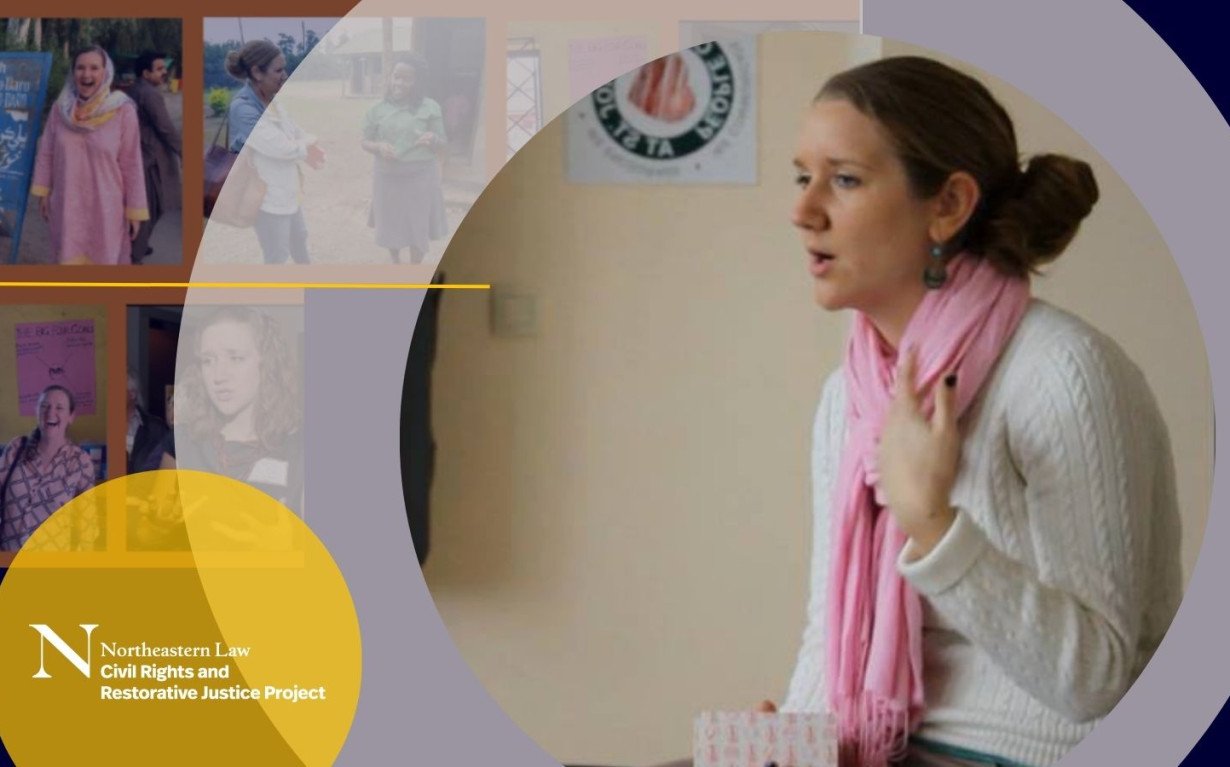
From public schools in North Carolina to refugee camps in the Democratic Republic of the Congo; Sara Merlo, Northeastern Law’s Civil Rights and Restorative Justice Project’s recently appointed Education Consultant, has spent the last 15 years crafting her skills as a world-class educator in history and social studies.
With an undergraduate degree in history and a master’s degree in teaching, both from the University of Virginia, Merlo has taught in Charlottesville Virginia, Brussels Belgium, Kinshasa Congo and Brooklyn New York.
“What I’m passionate about is making sure we’re not just telling the histories of marginalized people – which is important and essential – but that we’re also intentional about weaving them into the main narrative of American history,” Merlo told CRRJ in an interview. “There’s space to do that, and we must do that. It’s not happening yet and I’m excited to be part of this project because it’s one step closer to that.”
Merlo’s work over the last six months started with selecting nine cases of racialized killing from the 59 which occurred in her home state, North Carolina, and are contained in the Burnham-Nobles Digital Archive. Assisted by Kayla Scott, a former high school U.S. History Teacher and 2L student at Howard University Law, Merlo arranged these cases into three thematic source packets: Law Enforcement, Violence and Neglect; Black Soldiers and Veterans; and Lynching and Failure of the Law.
“The thing that makes the Archive amazing to use is that the resources are already curated into stories, with summaries and primary sources,” said Merlo. “It’s an easy resource for students and teachers to tap into.”
These lesson plans include cases from across the state, victims — men and women — ranging in age, including several teenagers. They are primarily designed for high school students, but Merlo said she is open to extending them for middle school and college students. Her aim is “to get this archive well-known and well-loved within the education space,” she said. To this end, Merlo is now working to grow CRRJ’s network of North Carolinian educators, “courageous and experienced teachers who are willing to teach these stories in their classrooms.”
But her connection to CRRJ extends beyond her passion for instructional design, history and education. It’s in her blood.
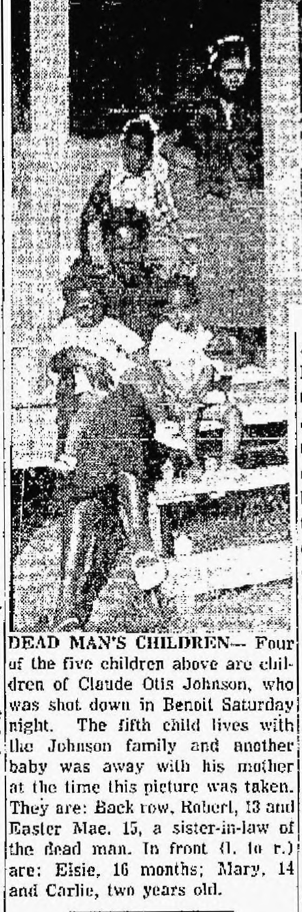
In 2023, Merlo’s mom, Sally Reams, uncovered “an old yellow newspaper in an old box,” in their family home in Virginia.
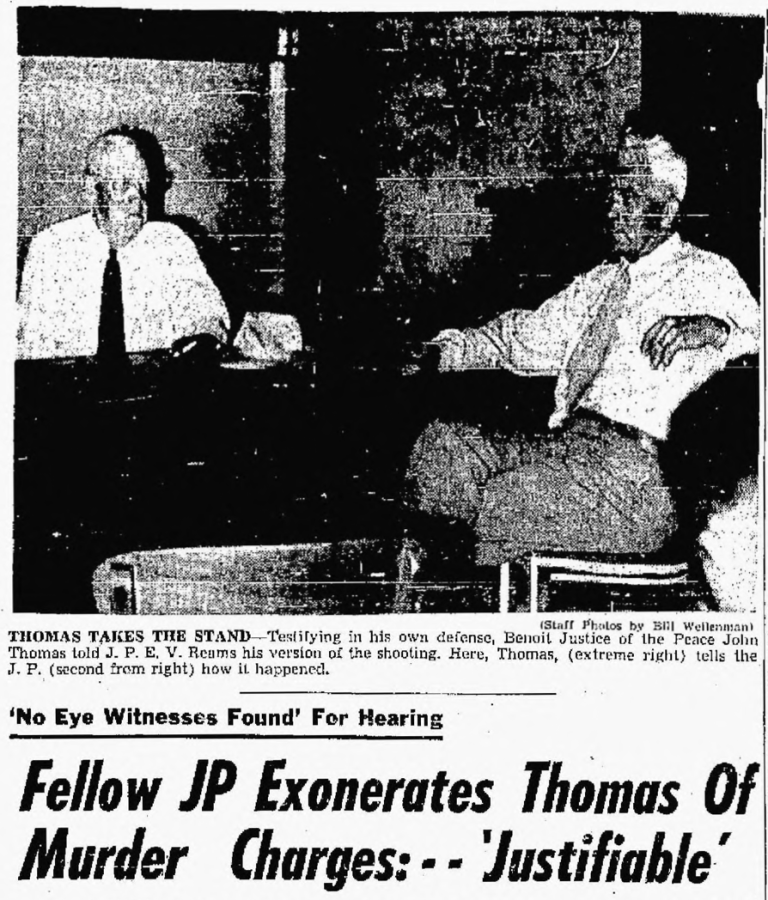
Merlo was aware that her great-grandfather E.V. Reams, had been a justice of the peace in Mississippi during the Jim Crow-era, and from this newspaper article, she learned that he had played a crucial role in the 1953 murder of Claude Otis Johnson.
Johnson, a tenant farmer, was killed by John Thomas, another justice of the peace in Bolivar County, Mississippi. Thomas, a store owner, alleged Johnson hit him during a dispute over a $37.50 grocery bill and Thomas shot Johnson as the father-of-four was leaving the store. Thomas recounted the events at a testimonial hearing a week later to fellow Justice of the Peace, Merlo’s great-grandfather. After hearing Thomas’ arguments for self-defense, it was reported that Reams said: “I don’t think you’ve produced sufficient evidence to bind him over to the grand jury. My decision is that he was justified in that he did.”
Thomas was indicted, tried and acquitted in state court and no federal proceedings followed.
“The newspaper was able to find eyewitnesses who could tell a different story, none of whom were, of course, present during Thomas’ trial.” said Merlo. “My great-grandfather clearly, in that moment, chose white supremacy over democracy, and it was really powerful to see it right there.”
Reams’ decision in Johnson’s case had never been discussed in her family, although it came as no surprise, said Merlo. Having known her grandfather well, she described him as “very openly racist” and speculated that perhaps his beliefs were inherited from his father.
The clipping led Merlo and her mother to Google. “We wanted to see if Reams’ decision was ever overruled, what happened next,” she said. That is when they discovered Maraya Best’s (‘18) student essay. Best researched Johnson’s case during her time at CRRJ in the summer of 2017.
Read more about Johnson’s death on the Burnham-Nobles Digital Archive
About the Archive
The Burnham-Nobles Digital Archive houses case files and documents for more than 1,000 cases of racial homicides in the Jim Crow South. Co-founded by Melissa Nobles, professor of political science at the Massachusetts Institute of Technology, and Margaret Burnham, CRRJ director and professor of law at Northeastern, these uncovered stories highlight how violence affected lives, defined legal rights and shaped politics between 1930 and 1954.
On Maraya’s recommendation, Merlo contacted CRRJ’s Director, Professor Margaret Burnham, who hired Merlo as an Education Consultant at the start of 2024.
“There’s two main driving factors for me,” said Merlo. “My family connection means I feel indebted. I have, as a white person in America from my lineage, benefitted in ways that Claude Otis Johnson’s family has not. I feel a sense of responsibility to do something with that. I owe it to the work and the country.”
“The other factor guiding my work is my expertise and passion for great social studies instruction,” she said.
“Black history is typically taught pertaining to slavery and civil rights and it’s still in the margins. It’s the side bars in textbooks. It’s not yet truly woven into the main narrative and all throughout the arc of American history.”
What’s been interesting is seeing how the historical patterns that get unpacked under each theme and the incidents that happened here, are still playing out now. It creates a sense of urgency.”
Merlo spoke of the parallels between the 1952 case of Howard Cousins – a Black man killed by police officers in Vance County, North Carolina, after Cousins, who may have suffered from mental health issues, set his bed on fire – and the recent police killing not far from her home, of an African American man also suffering mental health challenges.
“Fixing the way we teach history in public schools is part of the upstream solution,” said Merlo. “If we can fix that then we’ll be able to educate the future judges, future police officers … We’ve got to sharpen the way we teach U.S. history and it’s about making sure we’re weaving in local and historically marginalized stories.”
Merlo’s resource materials and student research guide will be publicly available fall 2024.


Join our mailing list
Receive the latest news about CRRJ's work, events and programs.
By submitting this form, you are consenting to receive email communications from The Civil Rights and Restorative Justice Project https://crrj.org. You can unsubscribe any time by using the SafeUnsubscribe link found at the bottom of every email. Serviced by Constant Contact.